
Trump’s Davos Address: America First Meets European Reality
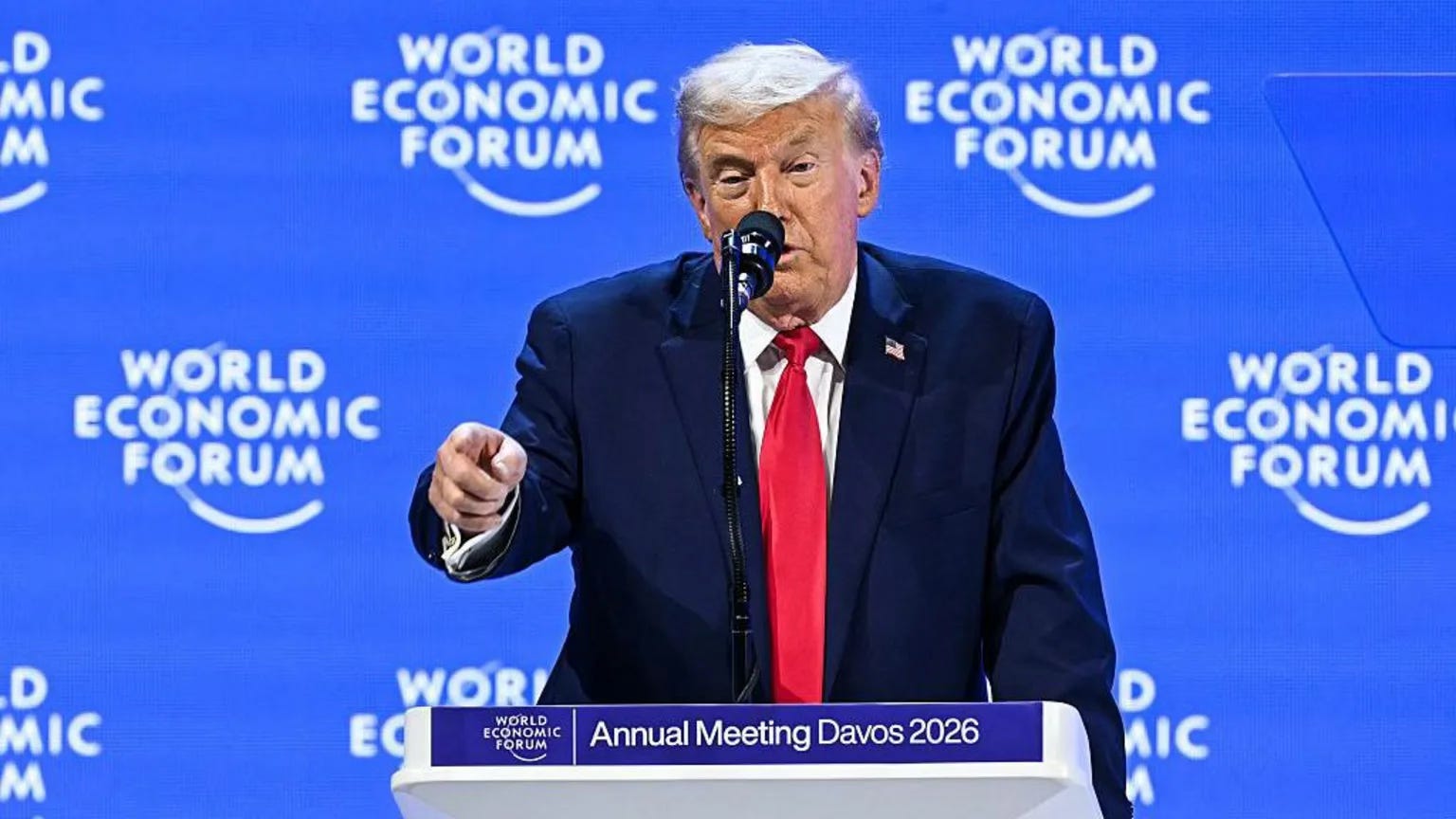
Donald Trump’s appearance at Davos 2026 delivered a clear message to European allies: the transatlantic partnership endures, but the terms of engagement have fundamentally changed. Speaking before the assembled global elite, the president outlined a vision of Western alliance grounded in reciprocity rather than sentiment, and backed by American strength rather than European expectation.
The address represented neither isolationism nor abandonment, but a recalibration long overdue. For decades, the United States has underwritten European security whilst absorbing asymmetric trade arrangements. Trump’s central argument—that a robust America benefits the West only when others contribute proportionally—struck at the heart of this imbalance.
Trade Relations: From Partnership to Parity
Trump’s discussion of tariffs was notably direct. He characterised them not as protectionism, but as corrective mechanisms against nations that profit substantially from American market access whilst maintaining barriers to reciprocal trade. Though unnamed, European economies featured prominently in this calculus.
This marks a decisive shift from the rhetoric of “shared democratic values” towards explicit transaction-based diplomacy. Market access, energy security, and defence commitments are no longer treated as separate policy streams but as interconnected elements of a negotiated settlement. Europe’s growing reliance on American liquefied natural gas is acknowledged not as an unfortunate dependency to be diplomatically downplayed, but as a structural reality that carries weight in bilateral relations.
Brussels may continue to frame discussions through the lens of institutional frameworks and multilateral agreements. The Trump administration, however, views such arrangements as living instruments subject to renegotiation when circumstances shift. This creates inevitable tension—not because the alliance faces collapse, but because Europe has grown unaccustomed to negotiating from a position of structural disadvantage.
NATO: Deterrence Requires Credible Commitment
The president’s remarks on NATO addressed a question rarely articulated in polite diplomatic circles: would European members genuinely come to America’s defence if circumstances required it? Whilst reaffirming American commitment to collective security, Trump deliberately raised doubts about whether that commitment flows in both directions—a calculated provocation designed to force honest reckoning rather than provide reassurance.
This is not anti-NATO sentiment. It is hard-headed realism about alliance credibility. Collective defence arrangements function only when all parties possess both the capability and demonstrable will to act. Decades of European underinvestment in defence have eroded that capability, leaving the United States to carry disproportionate military and financial burdens.
The political risk is real. If European capitals conclude that American security guarantees fluctuate with electoral cycles, pressure will mount for so-called “strategic autonomy”—a euphemism for European military independence. Yet this, too, fits within Trump’s broader strategy: genuine allies invest seriously in their own defence. Empty commitments serve no one’s interests.
The Arctic and Greenland: Strategic Foresight, Not Distraction
Trump’s references to Greenland warrant serious attention. The Arctic is rapidly emerging as a critical theatre for great power competition—militarily, economically, and technologically. Framed through the prism of Western security rather than territorial acquisition, Greenland offers strategic basing opportunities, missile defence positioning, and control over vital Arctic access routes.
Outright purchase remains politically fanciful. However, the trajectory is unmistakable: expanded American military presence, investment screening mechanisms (particularly regarding Chinese engagement), and deeper integration into Arctic defence architecture. Greenland functions less as an end goal than as leverage in broader strategic negotiations.
Three Probable Outcomes
A More Balanced Transatlantic Settlement
Expect increased friction over trade policy, regulatory alignment, and migration rhetoric. Yet deals will follow. European dependence on American energy and security guarantees remains structural, and the Trump administration appears content to allow that reality to shape negotiations.
A Reformed, Conditional NATO
Not disintegration, but transformation. European defence spending will rise, procurement timelines will accelerate, and tolerance for free-riding members will diminish. NATO survives by becoming more equitable, not more comfortable.
European Strategic Hedging
Not a break with Washington, but insurance against American political volatility. Trump has made explicit that American power will be deployed strategically and conditionally, not automatically and sentimentally. European capitals will plan accordingly.
Conclusion
Trump’s Davos address was not about dismantling alliances but rebalancing them on sustainable foundations. For Europe, the choice is straightforward: adjust to a more transactional America that uses its leverage deliberately, or persist in the illusion that shared heritage can substitute for shared sacrifice.
For NATO and the broader Western alliance, the message is uncomfortable but coherent: credibility precedes comfort, and capability determines commitment. The postwar era of American strategic generosity has ended. What follows depends on whether Europe chooses to meet partnership with parity.
Analysis based on President Trump’s Davos 2026 address and contemporaneous reporting and official statements from WEF, EU, NATO, and international media.
Brilliant summary, I totally agree.
Very astute! Well educated summary - I am a US citizen from birth and it always interests me on how Brits understand Trump and his love for our country. He's the only politician that I know of that doesn't take a salary from the taxpayers and net worth declines through his terms because he focuses on the well-being of US citizens both born and unborn.