
Two-Tier Britain: Identical Violence, Opposite Judgment

The above discussion between Bev Turner and Matthew Stadlin and Owen Jones’ diatribe.
Welcome to two-tier Britain. Not just in policing. Not just in prosecution. But in the moral framework itself.
Two years. Two identical riots. Two completely different verdicts from the establishment.
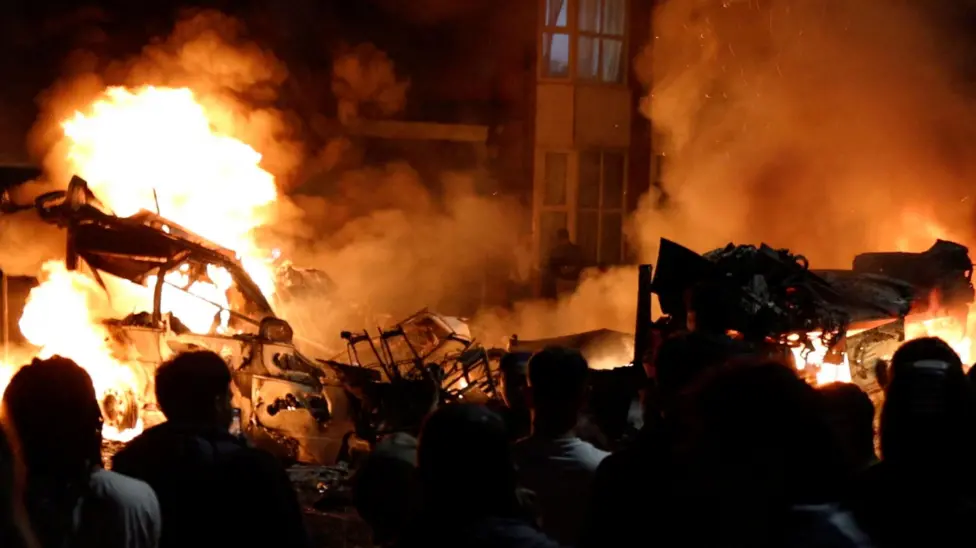
In July 2024, Harehills in Leeds erupted. Properties burnt. A double-decker bus was torched. A police car was overturned. Bricks and missiles flew at officers. The immediate trigger: a Romani family’s children being removed by social services. The community mobilised. They set fires. They fought police. Destruction followed.
The establishment’s response? Nuance. Sympathy. “An expression of accumulated anger,” commentators wrote. Warnings about far-right opportunism. Systemic grievance. Underlying issues. Context. The rioters weren’t bigots—they were people pushed too far by a broken system.
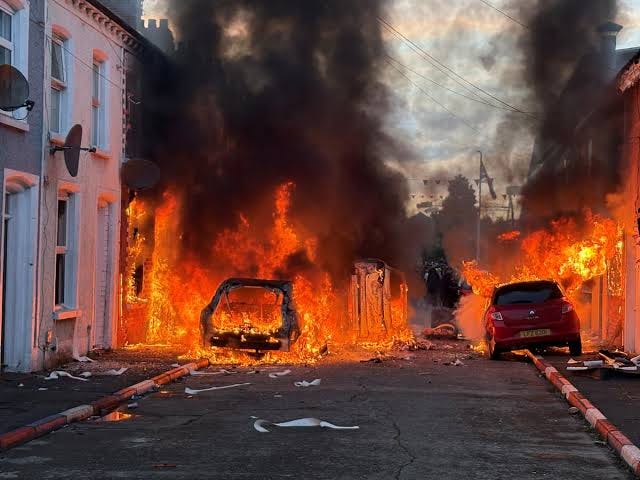
Last week, Belfast exploded. Properties burnt. A double-decker bus was torched. Cars were set ablaze. Bricks and missiles flew at officers. The immediate trigger: a Sudanese asylum seeker’s brutal stabbing attack on an Irish man. Attempted eye gouging. Facial lacerations. Attempted beheading. Young Irish men mobilised in response. They set fires. They fought police. Destruction followed.
The establishment’s response? Pure condemnation. “Racist thuggery.” “Ethnically targeted violence.” Immediate moral revulsion. No context. No systemic analysis. No acknowledgment of accumulated grievance. Just: This is what you are.
Same violence. Different communities. Different circumstances. Different moral verdicts.
One was treated as a symptom. The other as a character flaw.
The Two Tiers of Britain
This is what two-tier Britain looks like when the system codifies itself into narrative.
In Harehills, a community defended immigrants. That earned them space for grievance narratives, systemic explanations, and sympathy for underlying causes. The framework was: Yes, this is wrong, but let’s understand what broke these people. The system failed them first.
In Northern Ireland, a community responded to an attack by an immigrant. That earns them immediate branding as bigots. No space for grievance. No acknowledgment that a man nearly lost his eyes to someone with indefinite leave to remain. No systemic analysis. No framework for understanding. Just: This is what you are. This is racist. Close the conversation.
One community gets the benefit of systemic analysis. The other gets moral condemnation.
Same violence. Different tiers of judgment.
The Two-Tiers of Britain in Action
Consider what actually happened in both cases:
Young men mobilised around an incident
Property was destroyed
Police faced confrontation
A community expressed something through fire and disorder
In Harehills, that expression got diagnosed. Examined. Contextualised. The system asked: What drove this? What are the underlying conditions? Why are people this angry?
In Ireland, that expression got condemned. No diagnosis. No examination. Just: This is evil, this is racist, this is ethnic violence. Close the conversation.
If destruction and disorder in defense of an immigrant community reflects systemic grievance and accumulated anger, what does destruction and disorder in response to an attempted murder by an immigrant reflect?
The establishment won’t answer that. Because answering it undermines the entire two-tier structure.
It can’t apply systemic analysis to one and moral condemnation to the other without admitting that the framework isn’t about justice or consistency. It’s about power. It’s about who gets understood and who gets condemned.
The Real Story of Unrest in Belfast
The real story isn’t that Irish youth are uniquely bigoted or that their violence is uniquely immoral. The real story is that Britain’s institutions have codified a two-tier system of judgment, and it operates at every level—from the courts to the newsrooms to Parliament.
The pattern is consistent. When a favored group acts, institutions ask why. When a disfavored group acts, institutions demand they explain what they are.
Harehills: Community mobilises around an incident with immigrants → institutions diagnose systemic failure.
Northern Ireland: Community mobilises around an incident with an immigrant attacker → institutions diagnose moral failure in the community itself.
Same conditions. Different conclusions. Different tiers.
This isn’t just media bias. This is institutional architecture. The system has learned to apply different standards to different people, and it does it seamlessly—through language, through framing, through which questions get asked and which get shut down before they start.
When a community rises up defending an immigrant family, the establishment’s instinct is to find the systemic conditions that created the anger. It’s almost reflexive. The moral framework defaults to: What went wrong in the system?
When a community rises up responding to an attack by an immigrant, the establishment’s instinct is to shut it down. The moral framework defaults to: What’s wrong with these people?
That’s two-tier justice operating through narrative instead of statute. And it’s more corrosive because it’s harder to name and harder to fight.
Inconsistency Makes for Two Tier Britain
The question now is whether Britain’s institutions—media, political establishment, commentariat—will continue to operate as a two-tier system, or whether they’ll do the harder work of applying consistent standards.
If community violence reflects systemic conditions, apply that standard across the board. Don’t ask it only when defending immigrants makes political sense.
If community violence is moral failure, apply that standard across the board. Don’t reserve it for communities that lack institutional protection.
But applying systemic analysis to Harehills and moral condemnation to Ireland isn’t analysis. It’s two-tier justice wearing the mask of principle.
And the British public can see the difference.
Two tiers. Two standards. Two completely different verdicts for the same violence. That’s not complicated. That’s not nuanced. That’s the system telling you exactly who it protects and who it doesn’t.
Independent political analysis takes time and resources. To keep these articles free and accessible to everyone rather than locked behind a paywall, I rely entirely on voluntary reader support. If you value this work, please consider dropping a quick one-off tip in the coffee jar.
Unfortunately this government is so tone deaf i can't see anything changing.
It was obviously very deliberately done, honed over the years by academics and advisors. The problem is that the number of immigrants are so large, we're finally beginning to notice and they weren't properly prepared for that. Far-right thuggery was a far to lazy and ultimately damaging response that it made it even more obvious.
People genuinely don't care now if they're called far-right or racist because they know they are not.
The even worse problem is this has poked the REAL far-right, racist nut jobs into coming up with the wrong solutions......what a complete and utter mess 😳