
UK Policing Reform 2025: The Centralisation Gamble
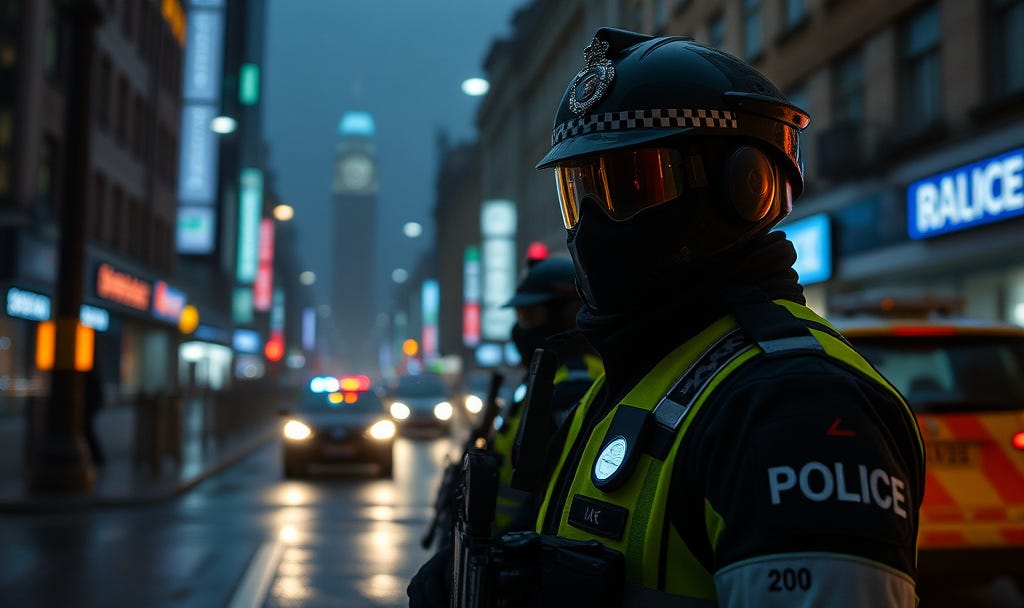
They’re Finally Fixing British Policing. So Why Does It Feel Like a Trap?
The Home Office just dropped a policing White Paper that reads like everything we’ve been screaming for since 2020. Crack down on shoplifting. Restore neighbourhood policing. Stop wasting police resources on Twitter spats. Get back to actual law enforcement.
Finally, right?
Not so fast.
Because buried beneath all the tough-on-crime rhetoric is something far more concerning: the biggest centralisation of police power in modern British history—handed directly to the one institution that’s proved it absolutely cannot be trusted with it.
What Is the National Police Service?
Here’s what’s actually happening. Britain is creating a National Police Service that will absorb:
Counter-terrorism policing
Serious and organised crime units
Fraud investigation
National intelligence operations
Forensics services
Police training standards
Strategic leadership across all forces
In other words, we’re abandoning the principle that kept British policing out of authoritarian territory for two centuries: distance between political power and enforcement power.
Our policing system was deliberately designed with friction built in. Local police forces, local accountability, local resistance to national political agendas.
That friction is being systematically dismantled.
The Home Office Track Record
The entire White Paper on police reform rests on one staggering assumption: that the Home Office is a responsible steward of expanded powers.
Let’s review the evidence, shall we?
Over the past decade alone, this department has given us:
Non-crime hate incidents (NCHIs)—literally recording British citizens for legal speech
Inconsistent border enforcement whilst immigration spiralled out of control
Ideological policing priorities that put pronouns above burglaries
Repeated legal failures and overturned policies
A complete collapse in public trust across every function they control
This is the institution the UK government is now handing the power to:
Set national policing targets for all forces
Impose mandatory standards on every police force
Dismiss Chief Constables at will
Control national data, AI systems, and surveillance infrastructure
Does that sound like a good idea to you?
Speech Policing in the UK: The Problem Isn’t Being Fixed—It’s Being Upgraded
Yes, the policing White Paper acknowledges the disaster of ideological policing in Britain. It admits police wasted resources investigating mean tweets whilst actual crime exploded. Non-crime hate incidents are “under review.” Public order laws might be “reassessed.”
Notice what’s missing from this police reform?
No repeal of vague speech laws
No statutory protections against future ideological enforcement
No hard limits on what can be policed
Instead, we’re taking all those troubling powers and placing them inside a more centralised, more technologically advanced policing system, overseen by the same people who created the problem.
The mechanism that gave us thought-policing isn’t being dismantled. It’s being turbocharged.
Police Surveillance Technology: Build It and They Will Use It
The White Paper is positively giddy about technology. Forty new facial recognition vans. A national AI policing centre. Integrated databases across all UK police forces. Centralised digital forensics.
Now, some of this police technology might be necessary. But here’s the thing about surveillance infrastructure: once it’s built, it never shrinks. It just waits for new purposes.
You think today’s Home Secretary will use facial recognition and AI policing responsibly? Perhaps. What about the one in five years? Ten years?
Once the surveillance machinery exists, future governments don’t need new laws. They simply inherit the capabilityand find new uses for it.
Democratic oversight of police surveillance? Barely mentioned.
Police Force Mergers: Fewer Forces Mean Less Resistance
Merging police forces across the UK might seem like common sense efficiency. And operationally, it probably is.
But it’s also removing institutional diversity from British policing.
Local police forces historically reflected local priorities. They provided natural resistance to national political agendas. A Chief Constable could push back. Local communities had a voice.
Larger merged forces operating under national standards? Far easier to steer from Whitehall.
Efficiency up. Independence down.
Police and Crime Commissioners (PCCs): Scrapping Them Means More Politics, Not Less
Police and Crime Commissioners are being abolished and replaced with mayors or council-led boards.
PCCs were flawed—but they were accountable and narrowly focused on policing.
Embedding policing within local government guarantees party-political incentives in law enforcement. It means:
Ideological signalling on enforcement priorities
Softer policing where it’s politically uncomfortable
Harder enforcement where it scores political points
In major cities, this practically guarantees two-tier policing by design.
Will UK Crime Rates Fall? Yes. But At What Cost to Civil Liberties?
The focus on shoplifting, anti-social behaviour, and town centre disorder is genuinely welcome. Ending the absurd £200 shoplifting threshold should never have required a White Paper on police reform.
Order will likely improve. Crime statistics will look better.
But here’s what won’t improve: public trust in policing.
Because people don’t just want lower crime rates. They want confidence that policing is:
Fair
Restrained
Insulated from political manipulation
Restoring order whilst concentrating power in a compromised institution isn’t a victory. It’s a Faustian bargain.
The Policing Gamble Britain Never Agreed To
This entire police reform rests on blind faith that future Home Secretaries will act wisely, proportionately, and neutrally.
Recent British political history suggests otherwise.
The last decade taught us that ideological capture happens quickly. That mission creep is inevitable. That powers granted for one purpose will be repurposed the moment political priorities shift.
We’re not just reforming policing in the UK.
We’re centralising enforcement power under a department that’s already demonstrated—repeatedly—that it cannot be trusted with less.
This isn’t caution. This isn’t pessimism.
This is pattern recognition.
The Uncomfortable Truth About UK Policing Reform
Britain absolutely needed a policing reset. The diagnosis in this White Paper is largely spot-on.
But we’re making a catastrophic mistake.
We’re fixing the symptoms whilst turbocharging the disease.
Here’s the trap: once you centralise this much police power, once you build this much surveillance infrastructure, once you remove every institutional check and balance—there’s no unwinding it.
The damage is permanent.
When the next ideological wave crashes through Whitehall—and it will—those activists won’t need to pass new laws. They won’t need to convince local forces. They won’t need democratic consent.
They’ll simply walk into the Home Office and flip the switch on machinery we built for them.
And we’ll have handed them the keys ourselves.
Key Takeaways:
The UK’s new National Police Service centralises unprecedented power in the Home Office
Police force mergers and PCC abolition remove local accountability
Surveillance technology including facial recognition and AI will be harder to control once built
Speech policing mechanisms remain in place despite promises of reform
Crime rates may fall, but civil liberties and police independence face serious threats