
Why Suella Braverman Leaving the Conservatives for Reform UK Was Inevitable
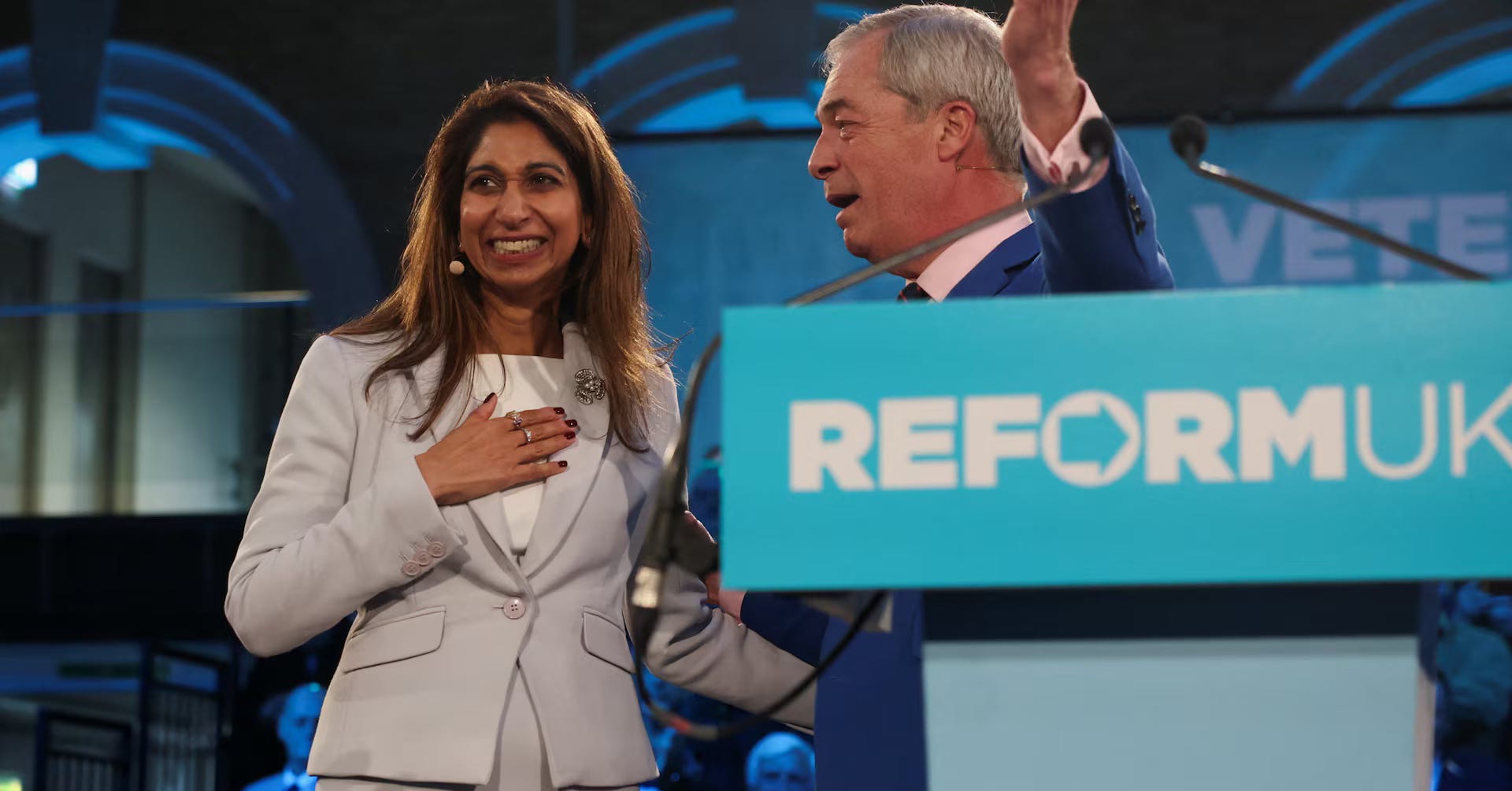
Suella Braverman’s decision to leave the Conservative Party and join Reform UK feels less like a shock and more like a long-overdue correction.
For years, Braverman existed inside the Conservatives as an ideological anomaly: too direct, too uncompromising, too out of step with a party that has increasingly defined itself by managerial caution rather than conviction. Her defection doesn’t just make sense — it clarifies something many voters have known for a long time: the Conservative Party is no longer the natural home for people who believe in borders, sovereignty, and the rule of law.
For Reform UK supporters, this is the kind of move they’ve been waiting for.
A Natural Fit, Not a Leap
Braverman has never really belonged to the modern Conservative Party. While the party leadership talked about “controlling immigration,” “taking back control,” and “getting tough on crime,” it repeatedly failed to deliver — and often seemed more interested in managing decline than reversing it.
By contrast, Reform UK has been unapologetically clear about what it stands for. On immigration, national sovereignty, free speech, and the limits of state power, Reform says what the Conservatives increasingly only hint at, if they mention it at all.
Braverman’s politics have always aligned more closely with that clarity than with the Conservatives’ endless triangulation. Her move doesn’t radicalise Reform; it legitimises it.
What This Signals to Voters
For disillusioned Conservative voters — particularly those who backed Brexit and expected meaningful change — Braverman’s defection is a signal that Reform UK is no longer just a protest option. It is becoming a serious political home for people who feel politically homeless.
This matters because voters don’t just follow policies; they follow cues. When a former Home Secretary concludes that the Conservative Party is no longer capable of delivering on its own stated promises, it validates what millions of voters already suspect.
For international readers: Reform UK occupies the space once held by traditional British conservatism — sceptical of supranational institutions, supportive of national borders, and deeply critical of elite consensus politics. Braverman joining them sends a message that this isn’t fringe politics; it’s a re-alignment.
The Damage to the Conservative Party
The Conservative Party should be deeply worried.
This isn’t just about losing one high-profile figure. It’s about what she represents: a bridge between mainstream Conservative voters and Reform UK. Her move lowers the psychological barrier for others — MPs, activists, donors, and crucially, voters — to follow.
In marginal seats and former “Red Wall” constituencies, this could be devastating. Those voters didn’t abandon Labour to be governed by hesitation and excuses. They wanted change. When that change didn’t arrive, Reform filled the vacuum. Braverman’s move pours credibility into that space.
Every Conservative who quietly agrees with her positions now has a question to answer: why stay?
Reform’s Moment
Reform UK has long been dismissed by its critics as a pressure group or a spoiler. That dismissal becomes harder to sustain with each serious figure who decides the old parties are no longer salvageable.
Braverman doesn’t need to soften Reform’s message — and Reform doesn’t need to soften hers. That alignment is precisely why this works. It’s not about personalities; it’s about coherence.
In politics, moments of realignment are rare but decisive. Yesterday may well be remembered as one of them.
The Conservatives didn’t just lose Suella Braverman. They lost another piece of the argument that they are still the party of conservative values in Britain.
Reform UK just gained one.
Sources: Public statements and reporting on Suella Braverman’s defection to Reform UK (January 2026).
I’ll have ICE with that please!
Good news for the UK.