
How a Lie and a Policy Failed Henry Nowak
The Case That Exposes Britain’s Two-Tier Policing

Henry Nowak bled to death on a gravel driveway in Southampton at 12:37 a.m. on 4 December 2025 while Hampshire police handcuffed him and read him his rights. He was 18 years old. He had done nothing wrong. He had been stabbed five times by a man who immediately told police that Nowak had attacked him — and because of who made that accusation and what policy framework the officers were operating under, they believed the lie instead of the dying teenager gasping that he couldn’t breathe.
This is not a story about accident or confusion. It is a story about a system that has been deliberately restructured to treat people differently based on race, and what happens when that system meets a killer smart enough to exploit it.
The Setup
On the evening of 3 December 2025, 18-year-old Henry Nowak — an accounting student, the first in his family to go to university — was walking home in Portswood, Southampton. He had been out with his football team. He was under the drink-drive limit. He was walking alone.
He encountered Vickrum Singh Digwa, 23, a member of the Nihang order of Khalsa Sikhs. Nowak filmed him on Snapchat. The video caught an exchange: Nowak said “Innit bad man, what bad man… you’re a bad man, say you’re a bad man, go on.” Digwa replied “I am a bad man.” Then Digwa grabbed the phone and stabbed Nowak five times with an 8-inch Sikh ceremonial dagger he was carrying on a belt.
The fatal wound was 8 centimetres deep, straight into the chest. It severed a major vein behind the collar bone. Henry bled 1.2 litres internally — enough to be unsurvivable even with immediate expert medical care. The pathologist, Amanda Jeffrey, was clear about this at trial. Nothing the police could have done would have saved him.
But that does not excuse what they did do.
Digwa’s Lie
Before the police arrived, Digwa called his parents. His mother, Kiran Kaur, came to the scene and took the murder weapon — the dagger, sheath and belt — and hid it at the family home. She was later convicted of assisting an offender.
Digwa’s brother Gurpreet made the 999 call. He told the operator that no weapons had been involved. He said his brother had been the victim of a racially aggravated attack.
This is crucial. The lie was not improvised. It was coordinated. It was planned.
When police arrived and found Digwa standing — with at most a small bruise — and Nowak on the ground bleeding, Digwa repeated the story. Nowak punched him, he said. Nowak used a racial slur. Nowak pulled off his turban.
None of it was true. The jury convicted Digwa of murder on 28 May 2026. The judge, William Mousley KC, found that Nowak “had said nothing racist” and that Digwa’s claim about the racial slur was a “wicked lie.”
But by the time the jury reached that verdict, it was five months later. In the first minutes, on that gravel driveway, the police had to respond to the information they had. And the information they had was: a Sikh man saying he had been the victim of a racial attack. A white teenager saying he had been stabbed.
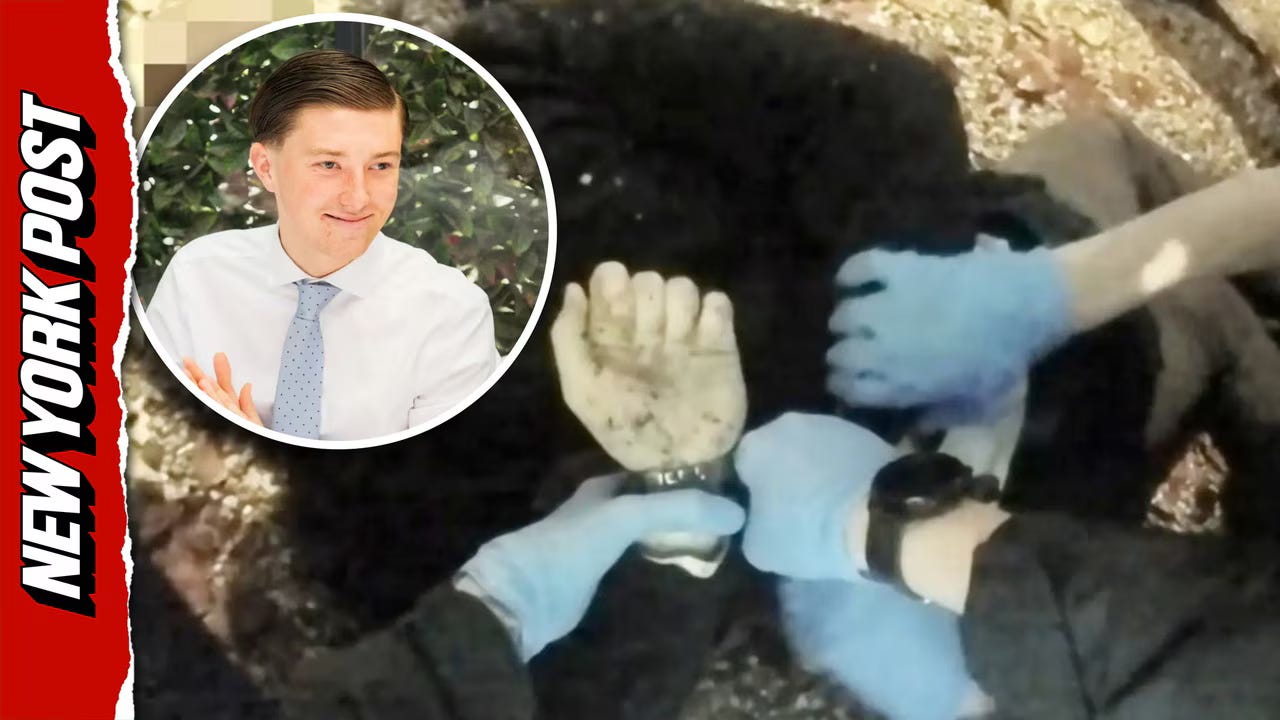
The officers handcuffed Nowak. An officer read him his rights. Body-worn camera footage — released on 2 June 2026, six months after Henry’s death — shows Nowak saying he had been stabbed and saying he couldn’t breathe. Nine times he said “I can’t breathe.” An officer replied: “I don’t think you have, mate.”
His last words were “Please brother, I can’t breathe.” Then the officers realised he was unresponsive, removed the cuffs, and started CPR. It was too late.
Henry Nowak - Cause and Effect
This is where the system comes in. The officers who arrived on Belmont Road that night were not unique. They were not sadists. They were not cartoon racists. They were operating under policy guidance that has been explicitly designed to make them treat people differently based on race.
In May 2022, following George Floyd’s murder in Minneapolis, the National Police Chiefs’ Council and the College of Policing — jointly — published a Police Race Action Plan. All 43 chief constables in England and Wales signed on. In 2025, it was updated. The update is called the Police Anti-Racism Commitment.
Here is what it says about how officers should police:
“Producing equality of policing outcomes for people from different ethnic groups by responding to individuals and communities according to their specific needs, circumstances and experiences, with understanding that these will be racialised and with the aim of reducing harm. It does not mean treating everyone ‘the same’ or being ‘colour blind’ (racial equality).”
Read that again. It does not mean treating everyone the same. It does not mean being colour blind. This is not an instruction to notice race and account for it in assessing risk or context. This is an instruction to make race the operative variable in decision-making.
If you are a police officer in England and Wales in 2025, and you arrive at a scene where a member of an ethnic minority group is claiming to be the victim of a racial attack, the policy framework you have been trained in does not tell you to be sceptical. It tells you that this person’s “specific needs, circumstances and experiences” are “racialised” — meaning, race is central to understanding what has happened — and that you should respond accordingly.
What does that mean in practice? It means you take the racial allegation seriously. Very seriously. It means you are trained to think that the risk of “getting race wrong” — of failing to respond to a racial attack — is asymmetrically large. It means that when you have a choice between believing the Sikh man or the white teenager, you are predisposed to believe the Sikh man.
That is not an accidental side effect. That is the stated purpose of the policy.
The Cover-Up Begins
Henry Nowak died. An independent officer review was triggered. The IOPC opened an investigation on 4 December 2025 — mandatory when someone dies in police custody. The case proceeded. The trial happened. The verdict came on 28 May 2026.
And then, on 2 June 2026, body-worn camera footage was released. The public saw an officer telling a dying teenager “I don’t think you have, mate.” The public saw handcuffs on a stab victim. The public saw the words “Please brother, I can’t breathe.”
The response from the institutions that had created the policy framework was immediate: minimise, defend, deny.
Chief Constable Alexis Boon gave an interview to the BBC. He said he was sorry. But he did not apologise personally. He said “We have said sorry.” He refused to resign. And when asked directly about two-tier policing, he said this: “Do we have a two-tier type policing system? I would refute that. I would say absolutely not!”
Three officers were removed from frontline duties. One left “for an unrelated reason.” None were named. None were suspended. None were reclassified from “witnesses” to suspects. The IOPC, in its 2 June statement, said: “The officers involved are currently being treated as witnesses, however as with all investigations, this is kept under review throughout.” A year on from the policy being written, the system was protecting its own.
The Prime Minister’s spokesperson said there was “no such thing as two-tier policing.” Sir Keir Starmer told the House of Commons that framing the case as evidence of two-tier policing was “unforgivable.”
The government did not say: we will review the policy that caused this. The government said: there is no such thing as the thing that caused this.
The Media Told a Different Story Depending on Where You Were
This is where the cover-up gets interesting. Because the cover-up was not uniform. It was selective.
In the United States, the Washington Post ran the story. CNN ran the story. Vice-President JD Vance posted on social media describing Henry Nowak’s death as evidence of “civilizational decline” and “ideological conditioning and two-tiered policing.” The US State Department issued a formal statement. In Italy, RAI — the state broadcaster — gave it major coverage. Australian outlets picked it up. All of them framed it the same way: a failure of policing driven by racial ideology.
In Britain, the mainstream media took a different approach.
The BBC and the Guardian — when they covered the bodycam release on the morning of 3 June — did not lead with the story. The BBC led with Ukraine. The Guardian moved Nowak to the front page only around 9:30 a.m. When coverage did come, the framing was different. The emphasis was on “far-right exploitation,” on riots in Southampton (11 police officers injured, per Hampshire Police), on Reform UK’s response, on the misidentification of innocent officers that had driven one former officer into a safe house with death threats.
All of those things happened. The riots happened. The misidentification happened. But the question is: were these the story, or were they secondary effects of the story? Was the story “Henry Nowak’s death and what it reveals about how policing operates,” or was the story “how people are responding to Henry Nowak’s death in dangerous ways”?
The British media chose the second framing. The international media chose the first.
This is not a conspiracy. This is institutional reflex. When a case runs against the script — when it suggests that the institutional response to Macpherson and to George Floyd has produced not justice but a different form of injustice — the reflex is to reframe. To make the response to the case the story, not the case itself.
The Policy Created the Conditions for the Crime
Here is what happened, step by step, and why it matters:
Police guidelines were rewritten to instruct officers to treat people differently based on race, with the explicit direction that “colour blindness” is not the goal.
Officers operating under these guidelines are primed to treat allegations of racial attack with extra weight when they come from members of ethnic minorities.
A killer exploited this. He told police that the white teenager who stabbed him had attacked him racially. The lie was immediately credible — not because the officers were evil, but because the policy framework made it credible.
The officers handcuffed the dying teenager instead of treating him as a stab victim.
The teenager died.
The institutions that had written the policy responded by denying the policy had caused what the policy had caused. They said there was no such thing as two-tier policing. They said the suggestion was unforgivable.
They protected the officers. They commissioned reviews rather than suspensions. They waited for the IOPC to report rather than acknowledging, in real time, that something had gone catastrophically wrong.
They tried to control the narrative. They emphasised riots and misidentifications rather than the policy and its consequences.
This is not a cover-up in the sense of hidden documents or deleted statements. This is institutional cover-up: the use of position, framing, resource and public authority to suppress accountability.
What It Reveals
The Henry Nowak case reveals how this works. It reveals that two-tier policing is not a myth, not a far-right talking point, but a documented policy with documented consequences. It reveals that when that policy meets a killer who understands how to exploit it, people die.
It reveals that the institutions that created the policy will not acknowledge it created the policy. They will deny the policy exists. They will reclassify the victims as suspects and the agents of failure as witnesses. They will commission reviews that will take years. They will hope that time will change the subject.
Most importantly, it reveals that the only people willing to acknowledge this — the only institutions willing to say, clearly and without equivocation, that something is wrong — are not in Britain. They are in Washington. They are in Rome. They are in allied democracies willing to name what we are calling a far-right fantasy.
That tells you something about the state of accountability in Britain. It tells you something about what happens when you build a system designed to treat people differently based on race, and then you tell those people that the system does not exist, that criticism of it is racist, and that anyone pointing out its consequences is a dangerous extremist.
The stab wounds killed Henry Nowak. But the way he was treated — disbelieved, handcuffed, abandoned — was determined by a system designed to work exactly as it did. The question is whether we will acknowledge it, or whether we will do what the institutions are doing right now: wait for the IOPC, commission reviews, emphasise the complexity, and hope people move on.
The rest of the world is not moving on. The rest of the world is looking at Britain and seeing something it thought it would never see: a Western democracy operating a racial caste system and denying it exists.
We need to stop denying. We need to stop protecting the officers and start protecting the public. And we need to acknowledge that this is not about far-right myths. It is about a policy that has caused a death, and an institutional response designed to make sure it causes more.
Independent political analysis takes time and resources. To keep these articles free and accessible to everyone rather than locked behind a paywall, I rely entirely on voluntary reader support. If you value this work, please consider dropping a quick one-off tip in the coffee jar.
It’s safe to come out, @Pamela Watson the tin foiled hat man has been blocked 🤣
This case has striking parallels to George Floyd — except Henry Nowak was entirely innocent, and the institutional response has been the inverse.
The "I can't breathe" echo alone should demand accountability. Yet the British government took the knee for a career criminal with a documented history of violence, allowed BLM riots and protests while locking down the rest of the country, and engineered policy changes in his name.
For an innocent 18-year-old white boy who actually died in police custody while saying those same words? The government's line is that two-tier policing doesn't exist, and anyone suggesting it does is beyond the pale.
The hypocrisy is structural and deliberate.
David Lammy has spent days denouncing J.D. Vance's comments on the Nowak case. Worth noting: Labour sent over 100 operatives to the United States during the presidential campaign to support Kamala Harris's election. Interference in foreign elections is apparently fine when it's in service of the preferred candidate. Commentary on a domestic tragedy is apparently unforgivable.
The most damning part of this whole affair is that international media — Washington, Rome, Australia — has taken this case more seriously than the British government has. That tells you everything about where institutional priorities actually lie.