
We're Shafted! The Budget 2025
Rachel Reeves Numerical Illiteracy
Rachel Reeves has once again leaned heavily on the old script: blame the Tories, invoke a phantom £22 billion black hole, and claim she’s here to restore “stability.” The problem? That black hole never existed — the Office for Budget Responsibility (OBR) itself denied it. Meanwhile, Reeves now presides over a real, growing fiscal gap. Current estimates put her government’s shortfall at over £50 billion.
When asked after her first budget by Trevor Phillips if more tax rises would be needed, she said flatly: No. Definitely not. “It’s on us now.”
Well, here we are — “on them” — and tax hikes are back. If that isn’t incompetence, it’s dishonesty.
She claims to be stabilising the economy. In reality, this Budget edges Britain closer to a fiscal cliff.
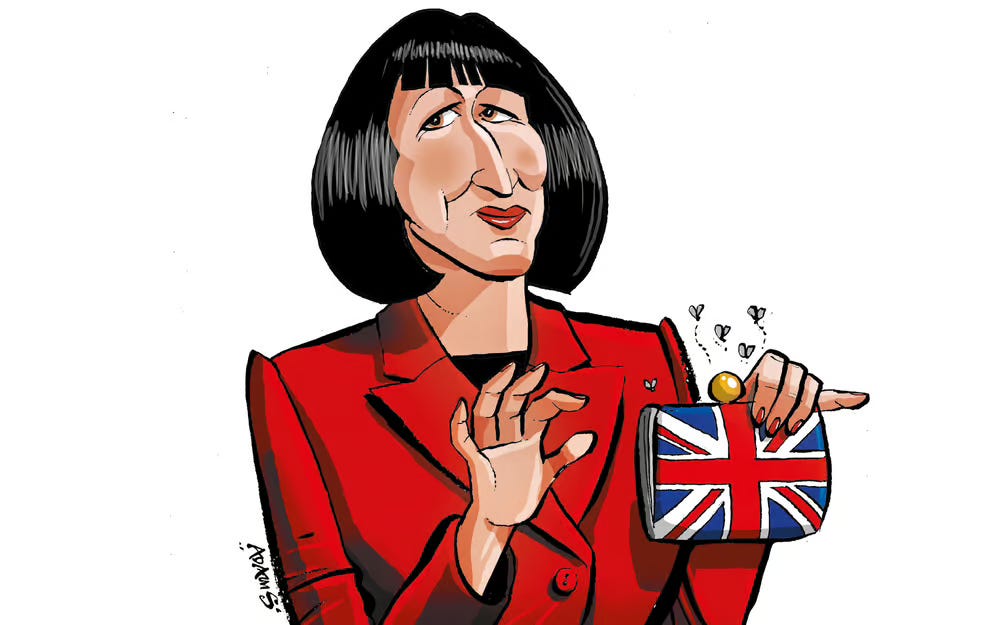
(image courtesy of The Standard)
Record-Breaking Taxation
Taxes are now set to rise to 38% of GDP, the highest level since the Second World War. That’s not “pragmatic.” It’s punitive. The very people meant to drive the economy — entrepreneurs, wealth generators, job creators — are being squeezed harder than ever. And if you think the wealthy will just grin and bear it, think again: over a quarter of a million high earners have already left the UK since Labour took power.
This isn’t how you grow an economy. This is how you hollow one out.
A Bloated Welfare Bill and a Dangerous Dependency
The most expensive decision in the Budget? Scrapping the two-child benefit cap — at a cost of £16 billion
It’s a politically charged move dressed up as a moral one. Yes, it will lift some families out of poverty, but it also increases state dependency and disincentivises personal responsibility. The more the state gives, the less incentive there is to earn. The people who will mostly benefit form it as the Muslim community. They are after the Muslim vote.
This isn’t about compassion — it’s about vote buying through benefits. And it raises serious questions about long-term sustainability.
The Illusion of Growth
Reeves is placing big bets on policies that won’t pay off.
Hiking the minimum wage again might sound good, but small businesses will bear the cost, and many will reduce headcount to survive.
Imposing a new council tax surcharge on £2 million homes (yes, £2 million is now a “mansion”) is a revenue grab, not a service charge. Council tax is meant to fund local services — not penalise certain postcodes.
These aren’t policies grounded in economic realism — they’re optics for short-term applause.
The Myth of the OBR Backing
Reeves leaned heavily on the OBR throughout her speech, as if their forecasts were ringing endorsements. But even the OBR is cautious. It revised growth projections down, slashed productivity assumptions, and warned that Reeves’ tax-and-spend plans won’t deliver the gains she’s promising.
So, she’s either misreading their figures — or deliberately misrepresenting them.
Britain Doesn’t Need Bigger Government — It Needs Bigger Thinking
This Budget does one thing well: it expands the state.
It builds dependance not resilience.
It punishes work, savings, and entrepreneurship — and props up dependency instead.
True growth comes when people are free to build, earn, risk, and create — not when they’re shackled to the Treasury. Reeves has chosen control over confidence, and ideology over outcomes.
The result? A budget built on magical thinking, numerical naivety, and political cowardice.
Is this the end for Rachel Reeves?